Type and press Enter.

Free Next Day shipping on orders over £50*

DID YOU KNOW

Light roasts contain more caffeine than dark roasts

Even though dark roasts taste stronger and bolder, they actually contain slightly less caffeine than light roasts. The roasting process is the reason why. As coffee beans are roasted longer and hotter, they lose more moisture and mass — meaning dark‑roasted beans become lighter and less dense.

Because light‑roasted beans stay denser, one scoop of light roast contains more actual bean material, and therefore more caffeine, than the same scoop of dark roast. The difference isn’t massive, but it’s enough that your morning light roast can give you a slightly bigger caffeine kick.

It’s one of those fun contradictions in coffee culture: the roast that tastes the strongest isn’t always the one that hits the hardest.

DID YOU KNOW

Espresso has less caffeine per serving than drip coffee

Even though espresso tastes stronger and hits harder, a single shot actually contains less total caffeine than a standard cup of drip or filter coffee. A typical espresso shot has around 60–75 mg of caffeine, while an average mug of drip coffee lands anywhere between 90–140 mg.

The difference comes down to volume. Espresso is concentrated because it’s brewed under high pressure, but you only drink 30 ml of it. Drip coffee uses a much larger amount of water, which extracts more caffeine overall.

Interestingly, espresso does have more caffeine per millilitre, but because you drink so little of it, the total intake is lower. So that tiny, intense shot might feel powerful, but your regular brewed coffee quietly packs the bigger caffeine punch.

Ready for the next fact whenever you are, Cam.

DID YOU KNOW

Espresso means “pressed out” in Italian

The word espresso comes from the Italian esprimere, meaning “to press out,” which perfectly describes how it’s made. Hot water is forced through finely‑ground coffee at high pressure, producing a small, concentrated shot packed with flavour and aroma.

Espresso isn’t just a drink — it’s the foundation of countless coffee favourites. Lattes, cappuccinos, flat whites, macchiatos, mochas… they all start with that tiny, intense shot. Despite its strength, espresso actually contains less caffeine per serving than a standard cup of filter coffee, simply because the portion is smaller.

Its invention in the early 1900s revolutionised coffee culture, allowing cafés to serve drinks in seconds rather than minutes. Fast, bold, and full of character — espresso lives up to its name.

DID YOU KNOW

Finland drinks the most coffee per capita

When it comes to coffee consumption, Finland sits comfortably at the top of the world rankings. The average Finn drinks around 12 kilograms of coffee per person per year, which works out to roughly 4–5 cups every single day. That’s nearly double the consumption of most other European countries.

Coffee culture in Finland is so deeply rooted that workers are legally entitled to two coffee breaks per day. Light‑roasted filter coffee is the national favourite, and social gatherings often revolve around “kahvi” and pastries.

Despite having no coffee farms of its own, Finland’s love for the drink has shaped an entire national identity — proving that when it comes to caffeine devotion, the Finns are in a league of their own.

DID YOU KNOW

Brazil is the largest coffee producer globally

Brazil has dominated the world’s coffee production for over 150 years, and today it still produces roughly one‑third of the entire planet’s coffee supply. Its vast coffee plantations cover around 27,000 km², mainly across Minas Gerais, São Paulo, and Paraná—regions with near‑perfect growing conditions.

In 2022, Brazil produced approximately 3.2 million tonnes of coffee, more than double the output of second‑place Vietnam. This massive scale keeps Brazil firmly at the top of global production rankings year after year.

The country’s coffee industry is deeply woven into its economy and culture, with both arabica and robusta varieties thriving there. Arabica makes up the majority of Brazil’s output, contributing to the smooth, nutty flavour profiles the country is known for.

DID YOU KNOW

Coffee plants can live for up to 100 years

Coffee plants are far more long‑lived than most people realise. Under the right conditions, a healthy coffee plant can survive for close to a century, although its most productive years typically fall between ages 7 and 20. After that, yield gradually declines, but the plant itself can keep growing, flowering, and producing smaller harvests for decades.

Most commercial farms regularly replace older trees to maintain high output, but heritage coffee estates sometimes keep century‑old plants as living pieces of agricultural history. These long‑lived trees often develop thicker trunks, deeper root systems, and a resilience that younger plants haven’t yet earned. It’s a reminder that behind every cup of coffee is a plant with a surprisingly long and fascinating life cycle

DID YOU KNOW

The coffee bean is actually a seed

Despite the name, a “coffee bean” isn’t a bean at all—it’s the seed found inside the fruit of the coffee plant, known as a coffee cherry. Each cherry usually contains two seeds, which develop their familiar shape as they grow pressed together. When only one seed forms, it becomes a rare “peaberry,” which some people believe has a sweeter, more concentrated flavour.

Before it ever reaches your cup, that seed goes through a long journey: harvesting, pulping, fermenting, drying, roasting, and grinding. Considering that over 2 billion cups of coffee are consumed every day, it’s wild to think the entire global obsession starts with a tiny seed hidden inside a bright red fruit.

DID YOU KNOW

Coffee is the world’s second most traded commodity after oil

Coffee isn’t just a drink—it’s a global economic engine. Every year, the world produces over 10 million tonnes of coffee beans, with more than 125 million people depending on the industry for their livelihood. It’s grown in over 70 countries, with Brazil alone supplying roughly one‑third of the world’s coffee.

Globally, the coffee trade is valued at more than $100 billion annually, making it second only to oil in terms of international trade volume. Around 2.25 billion cups are consumed every single day, which explains why the supply chain behind your morning brew stretches across continents. From smallholder farmers to international traders, roasters, and cafés, coffee fuels far more than just your morning routine—it powers a massive global economy.

What Do SL 28, SL 34, and Other Coffee Varieties Mean?

When you pick up a bag of Kenyan coffee, you’ll often see names like SL 28, SL 34, Batian, or Ruiru 11. To many, these look like codes—but behind them lies a fascinating story of science, tradition, and flavour.

What Does “SL” Stand For?

“SL” means Scott Agricultural Laboratories, a research centre in Kenya that, starting in the 1930s, bred and catalogued different coffee plants. Each new selection was given a number—so there are many “SL” varieties, not just 28 and 34.

Researchers were looking for plants that could thrive in Kenya’s climate, resist drought or disease, and produce exceptional flavour. Some varieties didn’t make the cut, but a few became legendary.

SL 28

Developed in the 1930s, SL 28 is prized for its bright, juicy flavours—often with wine-like acidity and fruit notes. It’s drought-resistant and remains one of the most celebrated varieties in specialty coffee worldwide.

SL 34

Created around the same time, SL 34 is known for its full body and balanced flavour. Together with SL 28, it helped establish Kenya’s reputation for producing coffees with clarity, vibrance, and complexity.

Other SL Varieties

Yes, there are more! SL 1, SL 2, SL 14, SL 17, and many others were bred and tested. Most didn’t perform as well in terms of yield, resilience, or flavour, so they never became widely grown. That’s why you mostly hear about SL 28 and SL 34 today—they’re the stars of the programme.

Ruiru 11 and Batian

Later, Kenya developed new varieties to tackle challenges like disease and climate change.

  • Ruiru 11 (1980s): A compact hybrid, resistant to coffee leaf rust and berry disease, while still offering bright flavours.
  • Batian (2010): Named after Mount Batian, it combines the resilience of Ruiru 11 with the flavour quality of SL 28 and SL 34.

These newer varieties show how Kenyan coffee continues to evolve—balancing productivity with taste.

Why It Matters

When you see SL 28, SL 34, Ruiru 11, or Batian on a bag of coffee, you’re not just reading a code. You’re glimpsing decades of research, farming tradition, and innovation. Each variety tells a story of resilience, flavour, and the people who cultivate it.

So next time you brew a cup, take a moment to appreciate the journey—from the laboratories of the 1930s to the farms of today—that makes Kenyan coffee so extraordinary.

Got thoughts, questions, or coffee stories of your own? Leave a comment below—we read every one and love connecting with fellow coffee lovers.

For more about who we are and what makes Bold Coffee… well, bold, check out our About Us page.

And don’t forget to explore our other blog posts—we’re always adding new content. Sign up to our newsletter and follow us on socials to stay updated. The world of coffee moves fast, and we’re here to keep you in the loop.

Ritual Harvest: The Story Behind our Limited Edition Sacred Hills Coffee.

Ritual Harvest: Coffee, Community, and Celebration in Jaén, Peru.

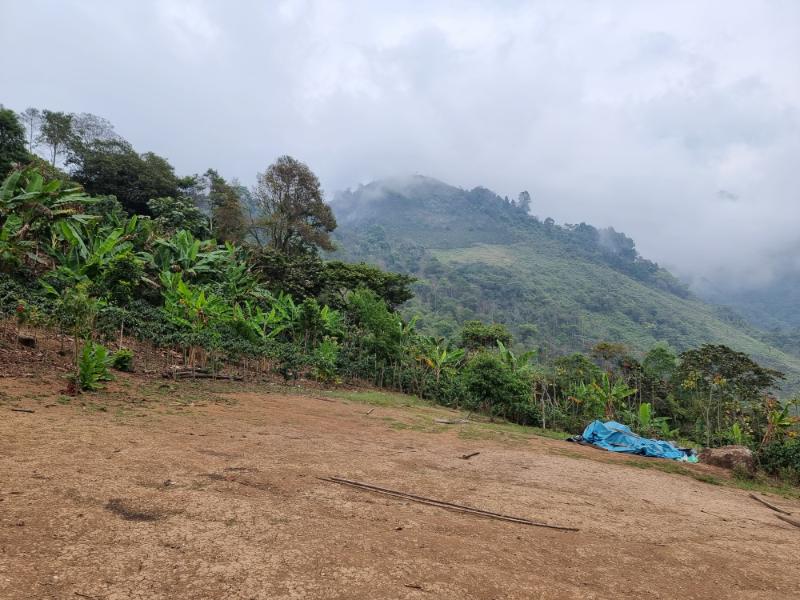
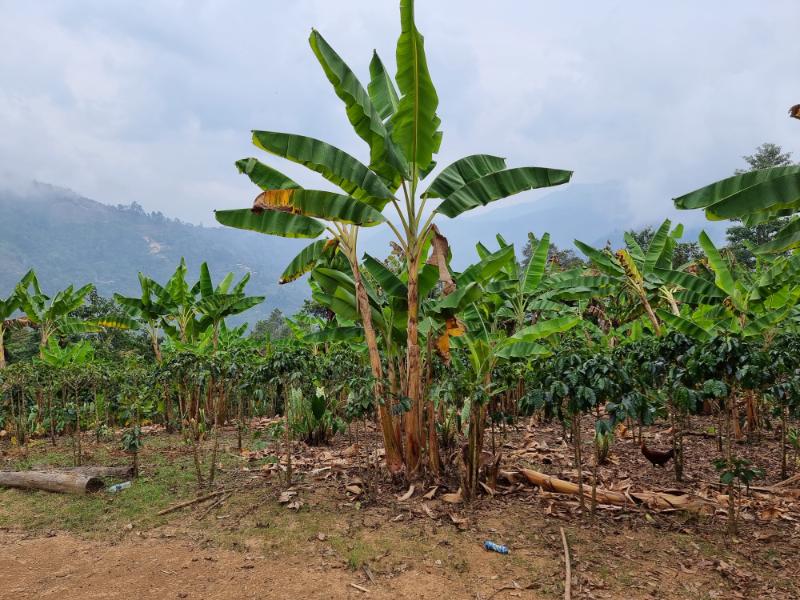
High in the uplands of Jaén, in northern Peru’s Cajamarca region, coffee is more than a crop — it is a rhythm that shapes daily life, seasons, and celebration. At 1,650 metres above sea level, LaNaranja Farm sits quietly among forested hills, its orange trees and coffee plants sharing the same soil, rain, and mountain air. This is where Elvis Reynerio Tineo Rafael grows coffee rooted not only in altitude and technique, but in tradition.

Our Sacred Hills Limited Edition coffee was born in this very farm.

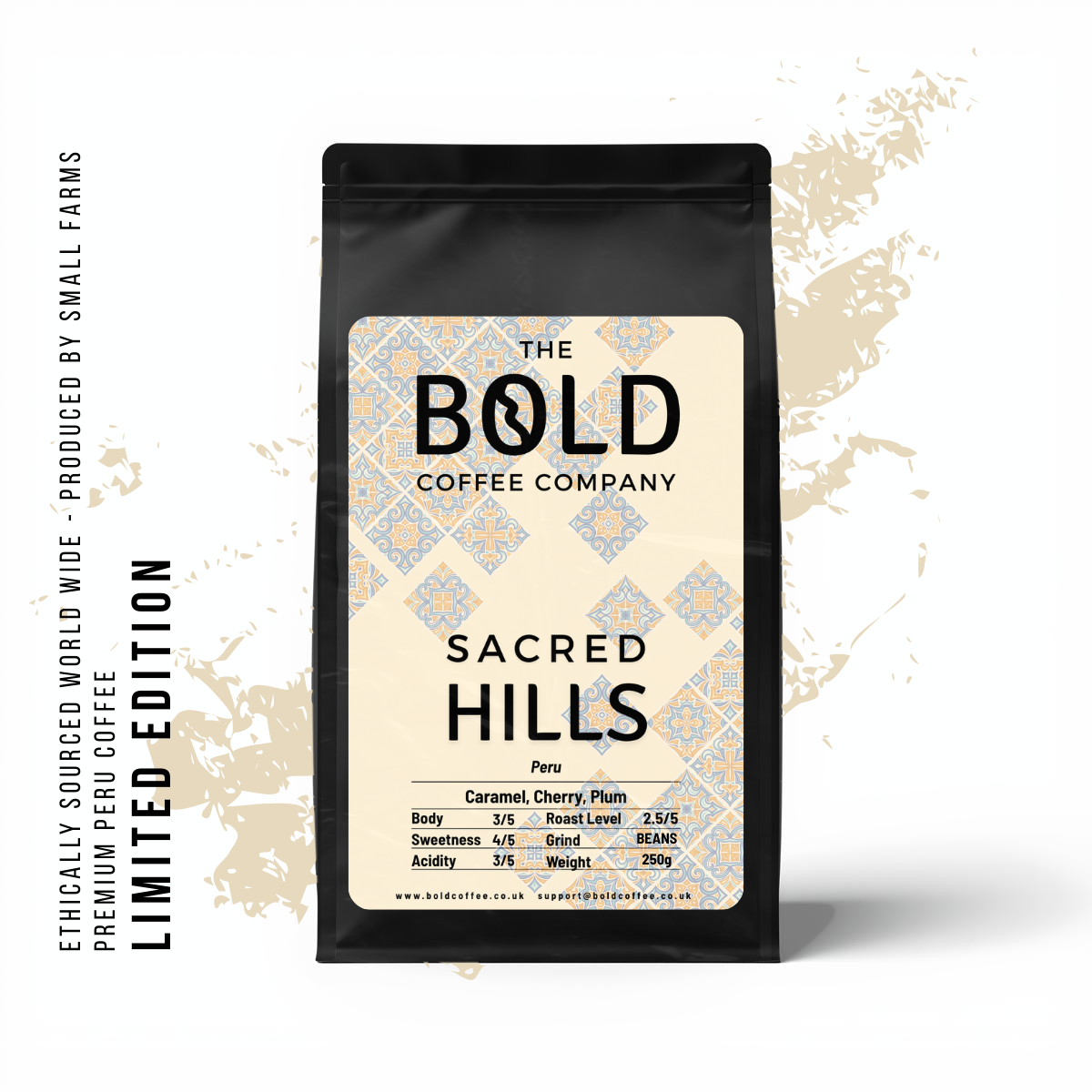
SACRED HILLS – LIMITED EDITION

(5 customer reviews)
£13.99

Caramel, cherry, plum. Grown high in the uplands of Jaén, Cajamarca. A fully washed lot of Caturra, Catimor, and Catuai, fermented in sealed bags for sweetness, structure, and clarity.

La Naranja is a one-hectare, family-run farm established in 2016 on land gifted to Elvis by his family — a continuation of a lineage of coffee growers stretching back generations. The knowledge passed down from grandparents to parents now finds expression in Elvis’s work: careful cultivation, attention to soil health, and a commitment to improving quality year after year. Coffee here is personal. Every harvest carries a sense of responsibility — to the land, to family, and to the wider community.

A Landscape Shaped by Nature

The farm’s high elevation and cool, humid microclimate create ideal conditions for coffee. Regular rainfall nourishes clay-loam soils with a balanced pH, while surrounding forest helps regulate temperature and moisture. La Naranja grows Caturra, Catimor, and Catuai, varieties well suited to the region and increasingly refined through careful processing.

Harvest runs from May to August, overlapping with one of the most important moments in the local calendar. Coffee cherries are hand-picked and processed using a fully washed method, with fermentation carried out in sealed bags — a sign of the region’s growing focus on precision, experimentation, and cup clarity. Annual production is modest, around 40 quintales, but quality is the clear priority.

Coffee and the Patronal Festival

In El Diamante, the high-altitude community where La Naranja is located, agriculture and culture are inseparable. Each year on 20 July, the community gathers for its patronal festival — a day marked by shared meals, music, and collective pride. It is a celebration of faith, land, and people, timed closely with the height of the coffee harvest.

This connection between harvest and celebration inspired the name Ritual Harvest. It reflects the idea that coffee here is not produced in isolation, but as part of a wider cultural rhythm. Picking, fermenting, drying — these are acts repeated year after year, shaped by tradition and reinforced by community. The festival is a reminder that coffee is both livelihood and legacy.

Farming with Purpose

Elvis leads a small team of four, using a balanced approach to farming that combines organic matter, mineral fertilisers, and recycled coffee by-products to maintain soil health. Like much of Cajamarca, La Naranja relies on rainfall rather than irrigation, making the farm vulnerable to climate variability, drought, and threats such as coffee leaf rust. Despite these challenges, Elvis remains focused on long-term sustainability — both environmental and economic.

His goal is simple but ambitious: to produce coffees that earn recognition for their quality and secure pricing that allows the farm to thrive for generations to come.

A Coffee That Tells a Story

Ritual Harvest is a reflection of place — high-altitude coffee shaped by mountain climate, family knowledge, and communal celebration. It represents the quiet dedication behind each cup and the cultural moments that give meaning to the work.

From the hills of Jaén to your brew bar, this coffee carries more than flavour. It carries a story of harvest, heritage, and the enduring bond between coffee and community.